WOODCUT
Cut along the grain
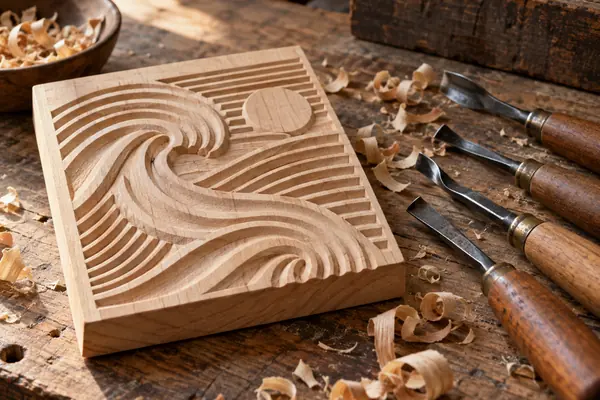
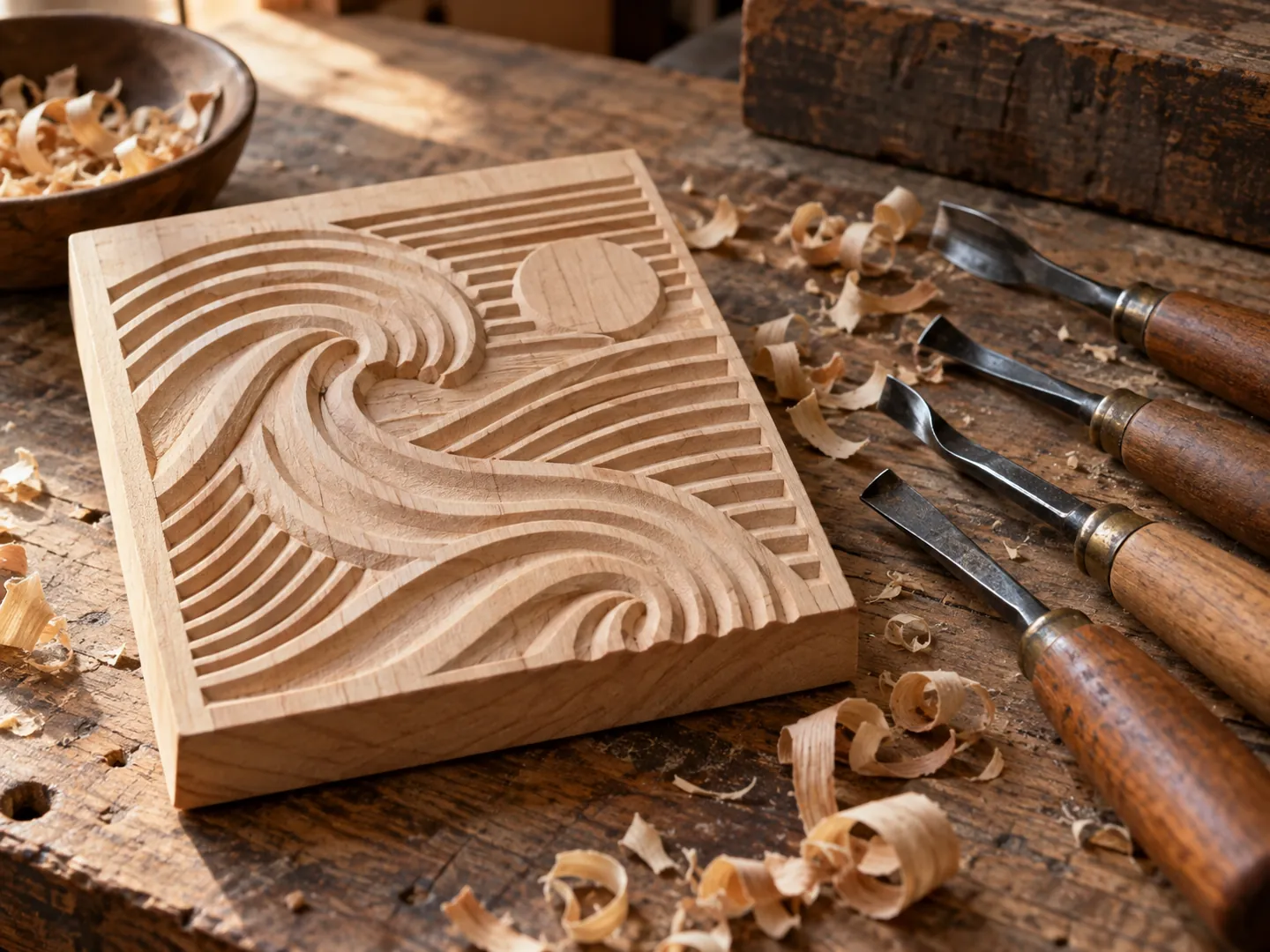
A woodcut is carved from a block cut along the grain. Europe used woodblock printing from the twelfth century, first for textiles, with images on paper by the late fourteenth.
Compare the blocks doodleradprint
A PLAIN-ENGLISH GUIDE TO RELIEF PRINTING
The oldest way to print a picture is also one of the simplest.
RELIEF the raised part prints
up to 8,000 Impressions experts believe were printed
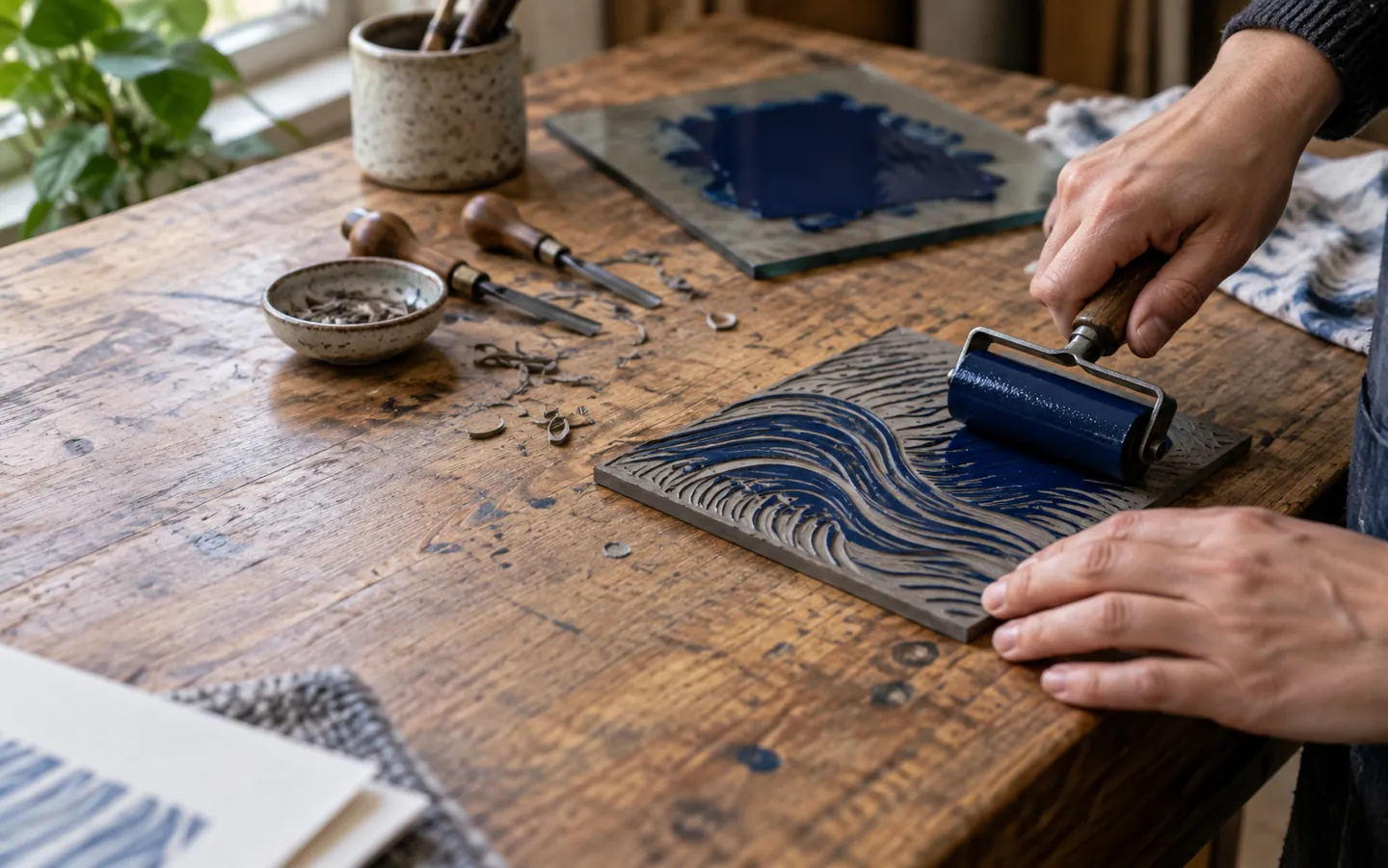
In relief printing you cut away the background so the image stands up from the block. The raised surface is inked, paper goes on top, and pressure transfers the image. Woodcuts, wood engravings and linocuts all work this way.
THE SHORT ANSWER
What changes is the block,
and how it lets you cut.
WOODCUT
A woodcut is carved from a block cut along the grain. Europe used woodblock printing from the twelfth century, first for textiles, with images on paper by the late fourteenth.
Compare the blocksLINOCUT
Linoleum, invented as a floor covering, is soft and has no grain, so it can be cut in any direction. It became popular with artists and amateurs in the twentieth century.
Try oneEDITIONS
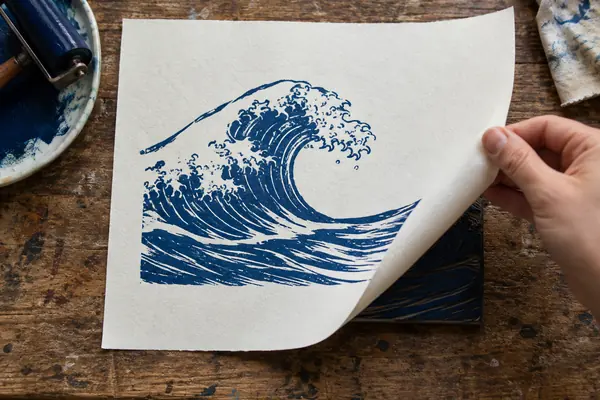
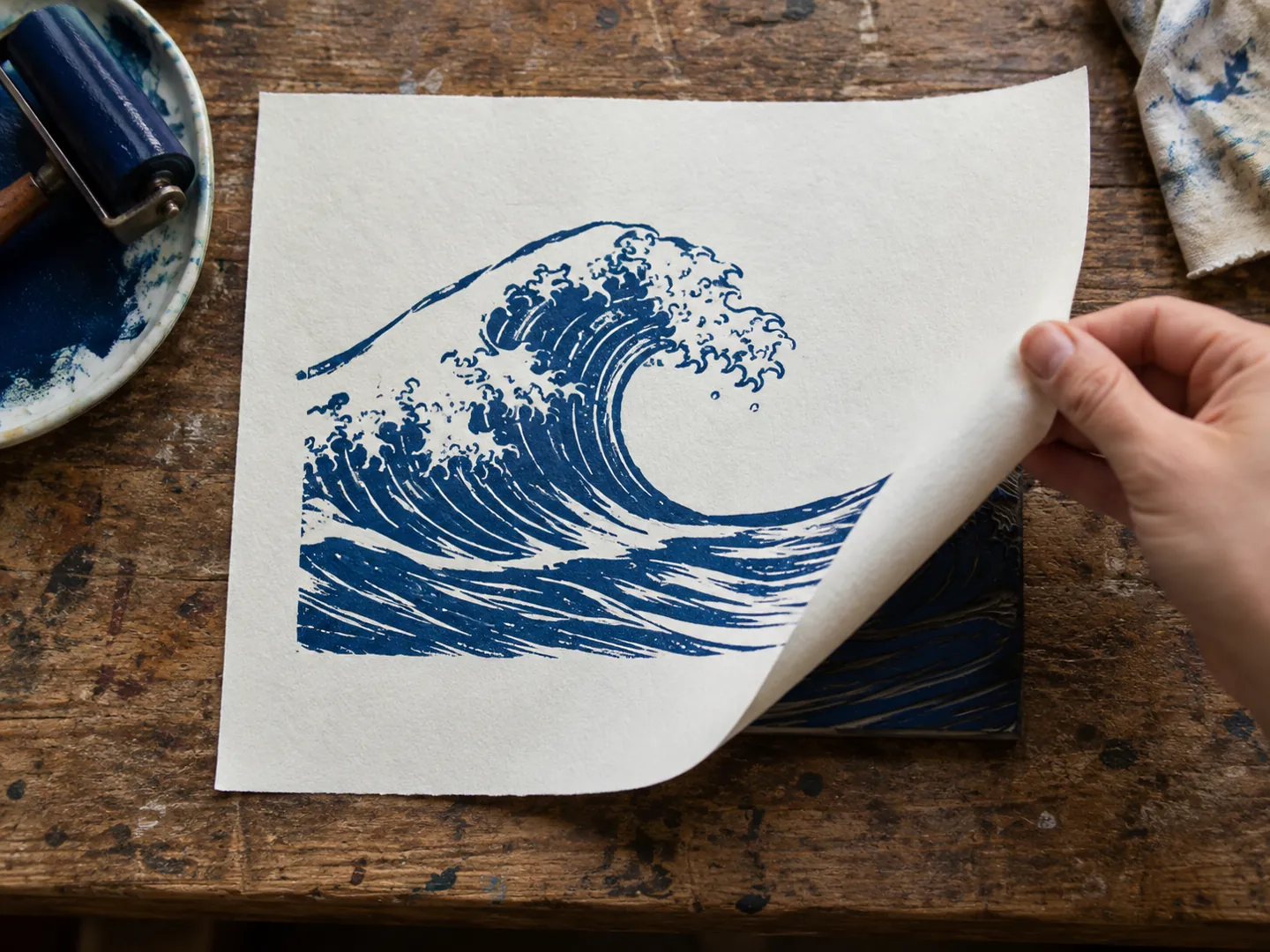
Experts believe up to 8,000 impressions of Hokusai's Great Wave were printed in Japan from carved woodblocks in the 1830s.
See the numbersWHICH BLOCK?
Pick a relief method. The value names the block, and the bar shows how hard it is to cut, from soft linoleum to very hard boxwood end grain.
Descriptions from Tate's glossary of art terms.
THE PROCESS, STEP BY STEP
Every relief print follows the same four steps, whichever block you choose. Lino is the usual starting point because it is soft and has no grain.
Lino cuts easily in any direction; wood is cut along the grain; hard boxwood end grain allows the finest lines.
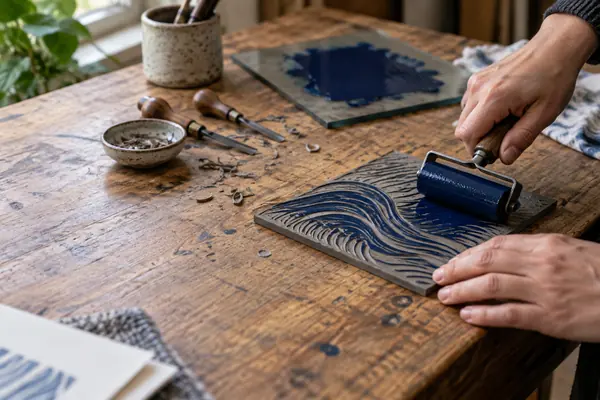
Remove everything you do not want to print, so the image is left standing as a raised surface.
Only the top of the block takes ink. Lino's slightly textured surface accepts ink evenly.
Lay paper on the inked block and apply pressure, in a press or by hand, the way Japanese ukiyo-e prints were made.
TWO NUMBERS WORTH KNOWING
From a British Museum study
of 111 surviving impressions.
up to 8,000
Impressions experts believe were printed
Print runs were rarely recorded, but publishers are estimated to have needed to sell at least 2,000 impressions of a design to make a profit.
THE GREAT WAVE · BRITISH MUSEUM
7 blocks
Separate woodblocks used, at least
Comparing 111 original impressions showed at least seven woodblocks were used for the early printings, most likely carved on both sides of four physical blocks. None of the original blocks survive.
THE GREAT WAVE · BRITISH MUSEUM
Very popular designs went further still: Hiroshige's Fifty-three Stations of the Tōkaidō is thought to have been printed between 12,000 and 15,000 times.
A SHORT HISTORY
Woodblock printing was used in Europe from the twelfth century, at first for textiles. In the nineteenth century, wood engraving became widely used to reproduce pictures in books, newspapers and journals, until photo-mechanical methods replaced it.
Blocks wear out. The British Museum study of the Great Wave traced small breaks and damage that appear in later impressions, and found signs of retouching by hand on 16 of the 111 impressions it located.
Questions
A way of printing in which the image stands up from the block. The background is cut away, the raised surface is inked, and paper is pressed against it.
Tate explains that a woodcut is cut along the grain with the background cut away, while a wood engraving is usually made on the hard end grain of boxwood, with the line cut into the block, allowing extremely fine detail.
Linoleum is soft, has no grain, and can be cut in any direction, more easily than wood. Its slightly textured surface also takes ink evenly.
No. Tate notes that woodcuts can be printed without a press by placing the inked block against paper and applying pressure by hand, as with Japanese ukiyo-e prints.
Experts believe up to 8,000 impressions were made. A British Museum study gathered photographs of 111 original impressions from museums, galleries, auctions, dealers and books.
Updated
ABOUT THIS NAME
doodleradprint.com is part of the DoodleSale portfolio. It isn't in an auction right now, but you can ask about leasing it.